
Many dog owners assume that every frustrating behavior means their dog needs more training. While professional dog training is incredibly valuable, the truth is that many common dog behavior problems are caused by poor management, not a lack of training. Dogs often get labeled as stubborn, destructive, or disobedient when the real issue is much simpler: they have access to things they shouldn’t. Before assuming your dog has a serious behavior issue, it’s important to ask a basic question: Have I managed my dog’s environment in a way that prevents the behavior from happening? Dogs Repeat Behaviors That Work. Dogs don’t act out of spite or rebellion. They repeat behaviors that are rewarding. If chewing shoes feels good, the dog keeps chewing shoes. If food is left on the counter and sometimes gets eaten, the dog keeps checking the counter. If the garbage can smells amazing and is easy to access, the dog will keep getting into it. Most household dog behavior problems are not signs of a “bad dog.” They are signs of an environment that allows the behavior to continue. Example #1: Dog Chewing Shoes Common belief: “My dog is destructive and needs more training.” Reality: Shoes smell like you, are easy to grab, and feel great to chew. Simple management solution: Put the shoes away. Effective management includes: Keeping shoes in a closet or cabinet Storing shoes on shelves the dog can’t reach Closing bedroom or entryway doors Once access is removed, the problem often disappears immediately—no training session required. Example #2: Dog Counter Surfing Common belief: “My dog knows better but keeps stealing food.” Reality: Dogs learn through reinforcement. If food has ever been found on the counter, the counter becomes worth checking. Simple management solution: Stop leaving food on the counter. Effective management includes: Clearing counters when food isn’t actively being prepared Blocking kitchen access when unattended Supervising dogs during meal prep Impulse control training is helpful, but management stops counter surfing right now. Example #3: Dog Getting Into the Garbage Common belief: “My dog is obsessed with trash.” Reality: Garbage is full of high-value smells and food remnants. To a dog, it’s a reward jackpot. Simple management solution: Use a garbage can with a secure, closing lid. Effective management includes: Trash cans with locking or weighted lids Heavier cans that can’t be tipped over Keeping trash behind a cabinet or pantry door Remove access to the garbage, and the behavior usually stops immediately. Example #4: Dog Destroying Things When Home Alone Common belief: “My dog has separation anxiety or needs more freedom.” Reality: Sometimes anxiety is involved—but often the dog simply has too much access when unsupervised. Simple management solution: Crate or kennel your dog when no one is home. When introduced properly, a kennel: Prevents destructive behavior Keeps dogs safe Stops rehearsal of bad habits Creates structure and predictability If the behavior only happens when the dog is alone, the issue is often access—not training. Training vs. Management: Why You Need Both Dog owners often believe: -Training fixes problems -Management avoids problems In reality, management supports training. When behaviors are managed: -Dogs practice fewer unwanted behaviors -Training progresses faster -Stress decreases for both dog and owner -Training teaches dogs what to do. -Management prevents them from practicing what not to do. Not Every Dog Behavior Problem Requires Training. Some issues absolutely require professional dog training: Reactivity toward people or dogs Aggression Severe anxiety Poor obedience in distracting environments But many everyday frustrations don’t. If a behavior stops the moment you remove access, supervision, or opportunity, the issue is management—not a deep behavioral problem. Why Simple Management Leads to Faster Results When owners stop overcomplicating dog behavior problems: -Dogs improve faster -Households become calmer -Training becomes clearer and more effective -Good dog behavior isn’t always about teaching more commands. Often, it’s about setting dogs up for success. Final Thought Before assuming your dog needs extensive training, ask yourself: -Have I made this behavior impossible—or at least difficult—for my dog to repeat? -Start with management. -Then add training when it’s truly needed. That combination is where real, lasting results happen.

Behavioral euthanasia is one of the most painful, misunderstood, and emotionally charged topics in dog ownership and professional dog training. It is also one of the least talked about—despite being a reality in a small number of severe behavior cases. If you are reading this, you likely didn’t arrive here casually. Most people reach this topic after months or years of stress, fear, management, training attempts, guilt, and emotional exhaustion. They arrive here because they love their dog deeply and are trying to make sense of an impossible situation. This article is not here to tell you what decision to make. It exists to explain how owners reach this crossroads, why reaching it does not make you a bad owner, and why—in rare, extreme circumstances—behavioral euthanasia can be the most responsible and compassionate choice available. What Is Behavioral Euthanasia? Behavioral euthanasia refers to the humane euthanization of a dog due to severe, unsafe behavioral issues—most commonly serious aggression toward people or other animals—when those behaviors cannot be safely or realistically managed long-term. This decision is not based on inconvenience, frustration, or lack of effort. It is made when ongoing risk, quality of life, and public safety are all significant concerns. It is a worst-case outcome—not a common one. How Do Dog Owners Get to This Point? No one adopts a puppy or brings home a rescue dog thinking, “Someday I may have to make this decision.” Behavioral euthanasia is almost never the result of a single incident or mistake. Instead, it is usually the end of a long road that includes: escalating aggression, repeated bite incidents or near-misses, chronic anxiety or unpredictability, constant management and supervision, lifestyle restrictions affecting the entire household, training that improves behavior but does not eliminate risk, and living in a state of hyper-vigilance. Over time, the question shifts from “Can we fix this?” to “Can we safely live this way forever?” That shift carries enormous emotional weight. Bite History and Lifetime Risk One of the hardest truths for owners to accept is this: Once a dog has bitten a person, that dog will always carry a bite risk. This does not mean the dog is evil. It does not mean training can’t help. It does not mean improvement isn’t possible. But it does mean the risk is never fully erased. Behavior modification can reduce the likelihood of future incidents. Obedience training can improve impulse control and handler compliance. Structure, tools, and routines can create safer outcomes. However, risk management becomes a lifelong responsibility. That often includes: constant supervision, environmental control, restrictions on guests or activities, and zero-mistake expectations. For some households, this level of management is realistic. For others, it is not—and acknowledging that matters. Why Management Is Part of “Success” In severe aggression cases, success is often misunderstood. From a professional standpoint, success rarely means a complete cure. More often, success is a combination of improvement and lifelong management. That may mean: avoiding certain environments permanently, using safety equipment consistently, structuring the dog’s entire life around trigger avoidance, and accepting that one mistake could have serious consequences. This is not failure—but it is not a small commitment either. Management has a cost: emotional exhaustion, reduced freedom, chronic stress, and a household built around preventing worst-case scenarios. Over time, that cost can become unsustainable. A Trainer’s Perspective: How Rare This Actually Is From a professional trainer’s perspective, this needs to be stated clearly: Behavioral euthanasia is rare. The vast majority of dogs with behavioral challenges: improve significantly with proper training, become manageable with structure and clarity, never escalate to severe aggression, and go on to live safe, full lives with their families. The cases that reach this conversation are extreme outliers. They are typically dogs who: have caused serious injury, show unpredictable or escalating aggression, require extreme, lifelong management, continue to pose risk despite skilled intervention, and are living in near-constant stress or conflict. These cases are some of the most emotionally difficult situations trainers encounter. “Some Dogs Can Be Managed… Some Can’t” Trainer Sean O’Shea describes a reality that resonates deeply within the professional training community: Some dogs can be managed by anybody. Some dogs can only be managed by some people. Some dogs can’t be managed by anyone. This framework removes blame from owners. A dog that requires perfect management, expert handling, and zero margin for error may be safe in one very specific home—and dangerously unsafe in most others. Some dogs, due to genetics, neurological wiring, trauma, or unpredictability, may never be safe in a typical living environment. Recognizing this is not giving up—it is acknowledging reality. Why Rehoming Isn’t Always the Responsible Answer When owners reach this point, a common thought is: “Maybe someone else can handle this dog better than I can.” This idea comes from love—but it can also be dangerous. Rehoming a dog with severe aggression or a bite history often does not solve the problem. It transfers the risk. That risk may land on: a new owner who is less prepared, a rescue or foster volunteer, veterinary or grooming staff, or a neighbor, visitor, or child. Pawning a dangerous dog off—no matter how well-intentioned—can create the same nightmare for someone else, or worse. In these rare cases, choosing not to pass that risk on is an act of responsibility. Guilt Does Not Define Responsibility Owners facing this decision often carry crushing guilt: What if I try one more thing? What if I fail my dog? What if I make the wrong choice? What if someone gets seriously hurt? That last question is often the turning point. Living with the knowledge that a single mistake—a door left open, a leash slipped, a moment of distraction—could result in severe injury is a burden most people were never prepared to carry. Responsibility is not about trying forever at any cost. Responsibility is about honesty, safety, and integrity. When the Hardest Choice Becomes the Most Compassionate One Behavioral euthanasia is never a casual decision. Even when it is the right one, it is painful and heavy. But in rare, extreme cases—when: aggression is severe or unpredictable, risk remains unacceptably high, quality of life is compromised for everyone involved, management failures could have catastrophic consequences, and rehoming would endanger others—behavioral euthanasia may be the most humane option available. It is not failure. It is not weakness. It is not a lack of love. Sometimes, choosing peace—for the dog, for the family, and for the community—is the final act of care. Our Responsibility as Trainers at Elevate At Elevate Canine Academy, our mission has always been to help dogs and the people who love them. We believe deeply in training, structure, accountability, and education—and we also believe in honesty. Behavioral euthanasia represents a fraction of the cases we see. Most dogs can be helped, and most families never come close to this crossroads. But when they do, our responsibility as professionals is not to offer false hope, shift risk onto someone else, or pressure owners into carrying a burden they cannot safely sustain. Our role is to assess risk clearly, advocate for safety, and support owners through the most difficult decisions they may ever face—without judgment, shame, or blame. Sometimes, the most ethical path forward is also the most painful one. When that moment comes, compassion means telling the truth, protecting others, and honoring the love that led an owner to seek help in the first place.

Yes, dogs can be trained without tools like prong collars or e-collars—especially when it comes to teaching basic obedience commands such as sit, down, place, and recall. With enough time, consistency, and skill, dogs can learn these behaviors using food, praise, and repetition alone. However, stopping unwanted behaviors is a different challenge. Behaviors like leash pulling, reactivity, ignoring commands around distractions, anxiety, or aggression often require more than simply teaching commands. In these situations, training tools play an important role in creating clarity, accountability, and reliability. At Elevate Canine Academy, we work with real people and real dogs—not professional handlers training ideal dogs in controlled environments. Our responsibility is to give everyday dog owners enough knowledge and understanding to manage behavior challenges and maintain good obedience in real-life situations. Many training videos that avoid tools feature dogs with minimal behavioral challenges or are filmed in low-stimulation environments. While these demonstrations can be useful for explaining concepts, they don’t always translate to busy neighborhoods, public spaces, or emotionally charged situations where problem behaviors actually show up. Professional trainers may be able to achieve results without tools due to years of experience, precise timing, and environmental control. Most dog owners do not have that skillset—and most do not have the time required to reach the same level of reliability without additional support. Training tools don’t replace training. They reduce the amount of time it takes to achieve dependable results. A helpful comparison is modern technology like GPS. People can still navigate using paper maps, but GPS makes travel faster, clearer, and far less frustrating. Training tools serve the same purpose by streamlining communication and reducing confusion for both the dog and the owner. For most families with busy schedules, attempting to achieve reliable obedience and behavior change without tools is unrealistic. When used correctly by knowledgeable trainers, prong collars and e-collars help dogs learn faster, build confidence, and succeed in real-world environments. They also provide a clear, consistent way for owners to communicate expectations to their dog.

Are you looking for dog training services? Here are some ways dog training can strengthen the bond you have with your pet.
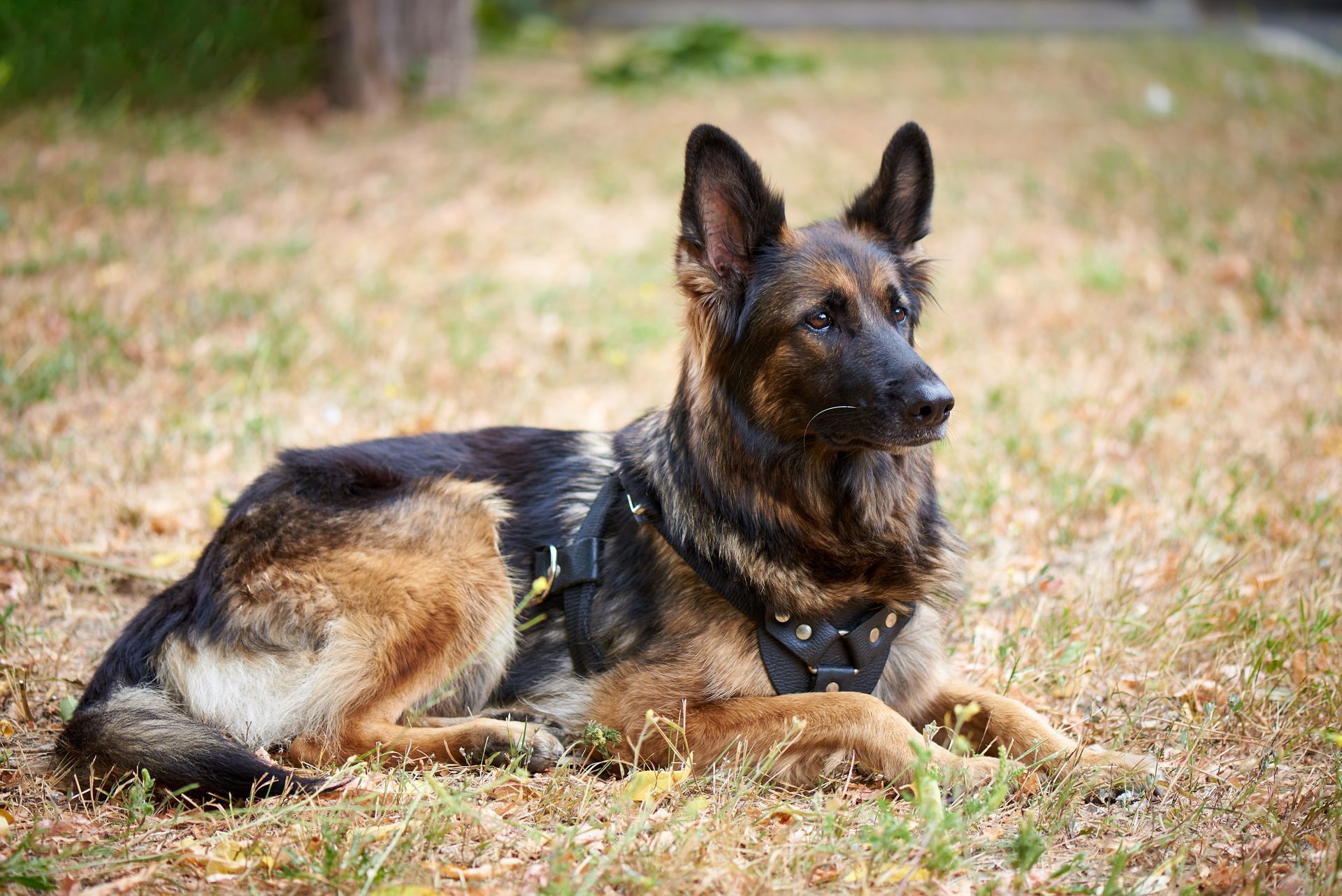
When we introduced an e-collar to Buddy, his owner panicked. “He looks so sad now. He used to be so excited.”

We get it. You’ve bought the snuffle mat, frozen Kongs, the flirt pole, the puzzle bowls… and your dog still acts like a lunatic. Why?
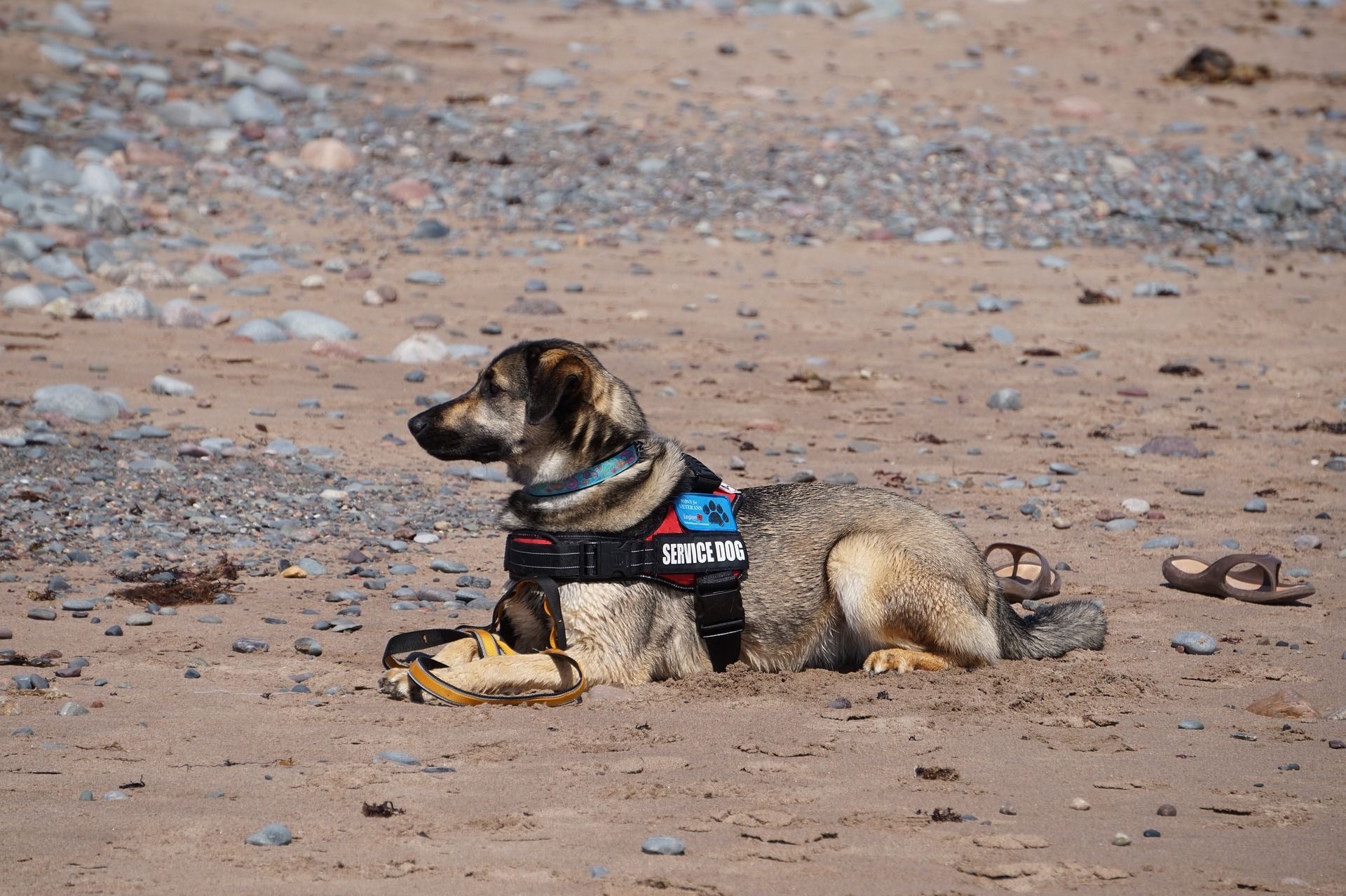
Last week I wrote a post about the differences between a service animal, emotional support animal, and a therapy dog. This week I am doing a deep dive into a service animal. There are only 2 questions that can be asked of a person with a service dog. 1. Is the dog a service animal required because of a disability and 2. What work or task has the dog been trained to perform. The Americans with Disability Act (ADA) is what defines a service animal. The definition defined by the ADA is a dog that is individually trained to do work or perform tasks for people with disabilities. (Note that nowhere in that definition does it say there is any type of certification requirement.) If a dog meets the definition of a service animal, they must be allowed anywhere that the public has access to. But there is one requirement when in public. The dog must be under control, and the dog is house broken. If the dog is not under control, the dog must be removed from the premises if asked to do so. What would be considered out of control? Barking, growling, lunging, jumping on people, biting, trying to sniff people, and going to the bathroom on the floor, would all be grounds to lose protection under the ADA. There are some key elements I want to mention about a service animal. 1. Any breed of dog can be a service animal, but it has to be a dog. There is an exception for miniature horses, but that is outside of the scope of this post. 2. There are no training requirements other than for the specific task the dog does to help with the disability. Which means people can train their own dog to do the task they need help with. 3. There are no certification requirements. 4. Wearing a vest that says service animal doesn't make the dog a service animal. Based on the definition on the ADA'S website, basically any dog can be a service dog, or can it be? One of my dogs I trained to retrieve bats for a local baseball team. He was very good at it. The only problem is he is a high drive dog, and he would be willing to die for that bat. With that much drive, I have to be careful what situations I put him in. In the wrong scenario he will at minimum, growl, bark, or worse, bite someone. I have back problems that at times make bending over extremely painful. I could easily train my dog to pick up anything. He would fall under the guidelines of the ADA, I could give him the designation of a service animal. However, if I take him into a store and he growls at someone that looks shady, or barks, he just lost protection under the ADA. I would have to remove my dog, if asked. My dog is very smart, and could do nearly any task I want to train him to do, but genetically he has way too much protective drive. He would make a horrible service dog because of his drive, but thrives at other things I do with him. If someone really needs a service dog to be with them all the time, running the risk of a dog's behavior nullifying the ADA protection while in public, is not an option. If a dog is trained as a seizure dog, then that dog must have the right temperament to be with his owner all the time. Which leads to the point I made in my original post when I discussed one place in ND that does train service dogs. They don't train just any dog to do the work. They choose dogs bred for the purpose. Even many of those dogs wash out of the program because they don't have the right temperament. The people that need these dogs can't risk having a dog with behaviors that would exclude them from the ADA protection. To conclude, almost any dog can be trained to do a task to assist with a disability, but very few would pass a temperament test, this would risk their ADA protection. So, if you see a person with a dog that has a vest that says service dog, and the dog is presenting bad behaviors, they have no protection under ADA to have that dog with them.
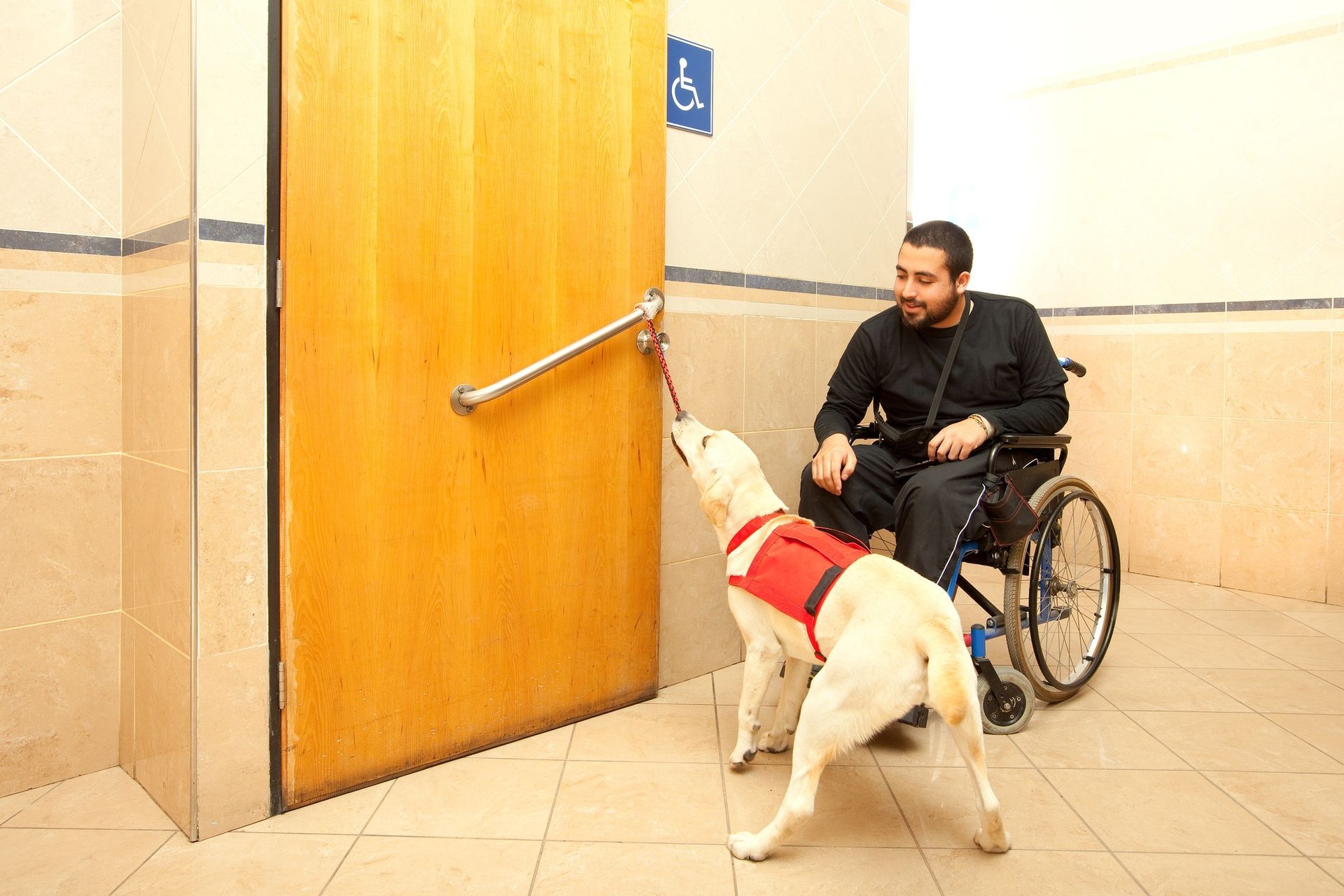
We frequently receive inquiries about training someone’s service dog. I would like to provide clarity to what a service dog is, and how that compares to emotional support animals and therapy dogs. Service dog training is very specialized, and the requirements of the dog are task oriented similar to law enforcement K9s. The dog has to have the correct temperament, or they will wash out of service dog school. There is only 1 training facility in ND that I am aware of that are accredited as a service dog training specialist and they are located in Jud ND. Service Dogs for America specializes in service dogs. Here is some information from their website in the FAQ section. The cost of a service dog is $25,000. They do not train a persons pet dog to be a service dog. They only train dogs that are bred for the purpose of being a service dog. They train for a host of service dog requirements, but for psychiatric service dogs, they only train for PTSD. The requirements to get a dog trained for PTSD is that the person has an official diagnosis of PTSD and have a minimum of 1 year of recent mental health care pertaining to the PTSD diagnosis. Understanding the Differences: Service Dogs, Emotional Support Animals, and Therapy Dogs 1. Service Dogs Definition and Role: Service dogs are highly trained to perform specific tasks that assist individuals with disabilities. These tasks are directly related to the handler's disability, helping them navigate daily life with greater independence. For example, a service dog might retrieve items, provide mobility support, alert their handler to medical conditions, or assist with psychiatric conditions like PTSD. Training and Requirements: Specialized Training: A dog must be trained to perform a specific task that helps someone in daily life, that are limited by a disability. Legal Protections: Service dogs are protected under the Americans with Disabilities Act (ADA). This allows them to accompany their handlers in almost all public places, including restaurants, stores, and airplanes, ensuring that individuals with disabilities have the support they need wherever they go. 2. Emotional Support Animals (ESAs) Definition and Role: Emotional support animals provide comfort and companionship to individuals dealing with mental health issues such as anxiety, depression, or phobias. Unlike service dogs, they are not trained to perform specific tasks but offer general emotional support through their presence. Training and Requirements: No Specialized Training: ESAs do not require specialized training, and they can be any type of animal that provides comfort to their owner. Certification: To qualify for an ESA, a person must have a letter from a licensed mental health professional stating that the animal's presence is necessary for their emotional well-being. No Access Rights: Unlike service dogs, ESAs do not have the same legal protections under the ADA. They are not permitted in public places where pets are typically not allowed, although they do have some protections under the Fair Housing Act and Air Carrier Access Act. 3. Therapy Dogs Definition and Role: Therapy dogs are trained to provide comfort and affection to people in hospitals, nursing homes, schools, and other settings. They are often part of therapeutic programs and visit institutions to interact with various individuals, enhancing their emotional well-being. Training and Requirements: - Basic Obedience and Temperament Training: Therapy dogs undergo basic training to ensure they are well-behaved and can remain calm in different environments. However, their training is not as specialized as that of service dogs. - Certification: Many organizations require therapy dogs to pass specific tests and receive certification to ensure they are suitable for their role. - No Access Rights: Therapy dogs do not have public access rights under the ADA. Their presence in public places is restricted to the institutions they visit for therapeutic purposes. Some things you should know about service dogs: - There is no requirement that a service dog wears a vest identifying it as a service dog. Wearing a vest that says service dog when the dog doesn’t meet the requirements of being a service dog does nothing more than draw negative attention, especially when the dog is not behaving like a service dog. - Do not approach a service dog as much as you want to pet that dog. It is imperative that the dog’s focus is its handler. The last thing that a handler wants is their dog to find other people more interesting than their handler. This can cause the dog’s obedience to become sloppy and ultimately can cause harm to the handler when the dog’s focus is everything but the handler. - There is no industry wide accepted accreditation that can certify a service dog. So there is no such thing as a certified service dog. You will find plenty of people on the internet that will sell you a certificate, however there is no requirement of a certification for the ADA. To conclude, I believe that most people that want a service dog, really are wanting an emotional support animal, but the privileges of being able to take their dog just about anywhere. Unfortunately, too many people try to pass their ESA off as an ASA which only hurts people that have a true ASA.

“Bailey’s not aggressive. She doesn’t bite. She’s just a little hyper,” said Jenna, her owner. “We don’t need training, but I figured I’d ask about classes.”
When Mark signed his golden doodle, Cooper, up for training, he said, “My dog needs help. He jumps on everyone and never listens.” What he didn’t say was, “I’m overwhelmed and frustrated and tired of being embarrassed in public.”

View more

Free Estimates
Don't wait to get your dog training started.
We provide estimates the next business day!
Get Your Estimate Now
Contact Us